- Shri Siddhgiri Math, Kaneri, Kolhapur, Maharashtra.
- Ramkrishna Mission, Ranchi, Jharkhand.
- Deendayal Shodh Sansthan, Chittrakoot, Madhya Pradesh.
- Dr. Hedgewar Sewa Samiti, Nandurbar, Maharashtra.
- Bhausaheb Bhuskute Smriti Lok Nyas, Bankhedi, Narmadapuram, Madhya Pradesh.
- Sanskrati Samvardhan Mandal, Sangroli, Nanded, Maharashtra.
- Rural Development and Research Foundation, Akola, Maharashtra.
- Vikas Bharti, Ranchi, Jharkhand.
- Keshav Smarak Nyas, Halflong, Assam.
- Eklavya Gramin Vikas Foundation, Hyderabad, Telangana.
SANSTHA SAHBHAG
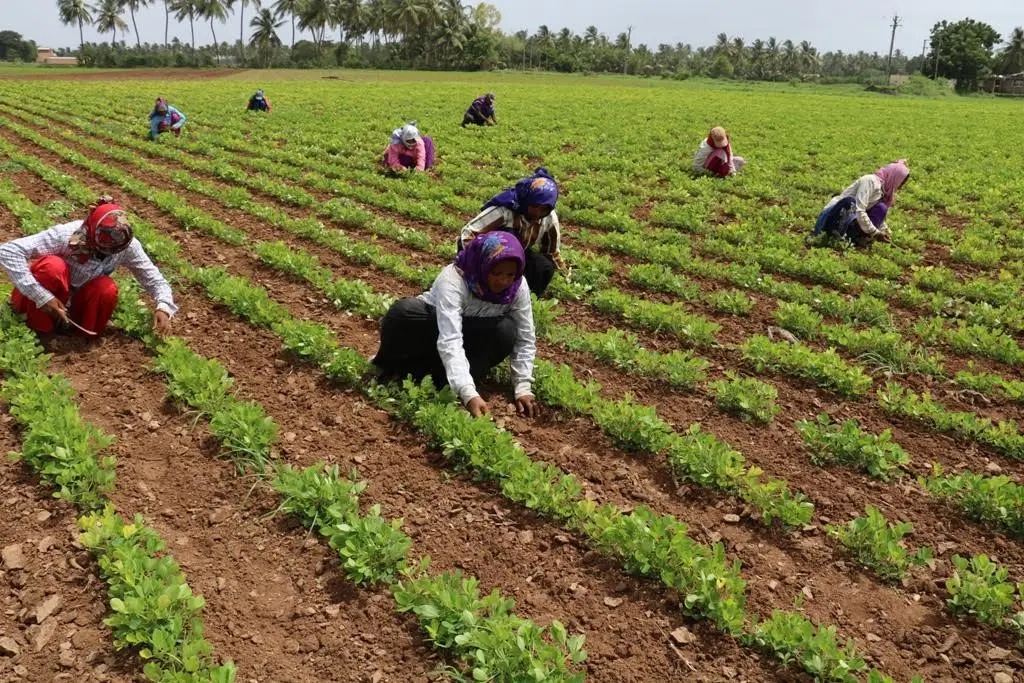
Bharat, for ages has been prosperous, flourishing nation aligned to the ecological sustenance. It has been thriving economically by way of trade with rest of the world. The very basis of this resourcefulness and economic well-being was our perspective about nature and environment. Bharat believes in “Ekatma Vishvadrishti”, according to which, the creation, nature and environment are interconnected and inseparable. We have a compassionate and harmonized co- existence with Mother Nature.
Bharat has had rich biodiversity. This nation has diverse geographies with varied crop patterns, flora, fauna, climatic zones and terrains. Bharat has evolved its agro-centric, cow-centric, trade-based economy considering this vast diversity. People of this nation developed the resources for their livelihood based on their ancient knowledge in accordance with the habitat they were living in. This enabled the sustainable use, preservation and enrichment of resources sustaining livelihoods.
In contrast to the pre-colonial times, after independence Bharat adopted the modern agricultural systems and focused on improving yields and production in agriculture. Green revolution came with various changing scenarios in agriculture like hybrid and improved seeds, chemical fertilizers and micronutrients for nutrition management, chemical pesticides for pest management and fossil fuel- based farm mechanization. There on every decade saw ever increasing use of fertilizers, pesticides and fossil fuel use in agriculture. The agriculture became market centric and cash crops gained center stage. On one side while cash crops were luring the farmers, on other side the landholdings were decreasing and rainfed agriculture faced numerous challenges. Green revolution came at a price and today all the stakeholders including farmers are realizing the need to assess and turn back where the balance between development and sustainability can be achieved.
Owing to the diversity this nation has, unification of techniques and technologies, seeds, livestock, machines and farming techniques was not an option here. The appropriation of technologies in this nation should be considering the geographic diversity, climatic zones, land holding and local habitat. The research and development in the area of agriculture in this country should be driven by all the above stated facts.
About 60%-70% of the farmers in Bharat fall under the category of marginalized. These marginalized farmers, in their own agro-climatic zones and geographies practice the agriculture primarily dependent on monsoon. These farmers play most significant role in food security of the nation. In context of ever-increasing population, increasing number of marginalized farmers, lack of apposite agricultural policies, increasing uncertainties on account of climate change there is an urgent need to find an alternative model that will lead to sustainability.
Agricultural Development in recent times is disturbing, destroying biodiversity, intensifying the fossil fuel use, degrading the soils, exploiting water reserves. The escalating rate of erosion of natural resources in general and agro-ecology in particular is a cause of grave concern in Bharat. It has become imperative to convey to all stakeholders the need to address this issue with utmost urgency.
To analyze objectively as to what are the temporal changes that have happened in agriculture and natural resources is an important task to find appropriate solutions to the current problems. There is a need to rationalize the modernization to suit the carrying capacity of ecological systems. Many organizations play vital role to provide modern agriculture technologies to the farmers in the form suitable to the local conditions. In our endeavor to revive Bhartiya Krishi, collaborations with these organizations can be a big benchmark.
- Shree Ram Krishna Trust, Kukma, Kutch, Gujrat.
- Niramay Bahu-Uddeshiya Seva Sanstha, Nagpur, Maharashtra.
- Gram Vikas Jan Kalyan Trust, Gudibande, Chikkaballapur, Karnataka.
- Shramik Shilpi, Patratu, Ramgarh, Jharkhand.
- Gramin Tantragyan Sanstha, Chandannagar, Pune, Maharashtra.